
+++++++++++++++++
SmartRosy: The Future of Roses
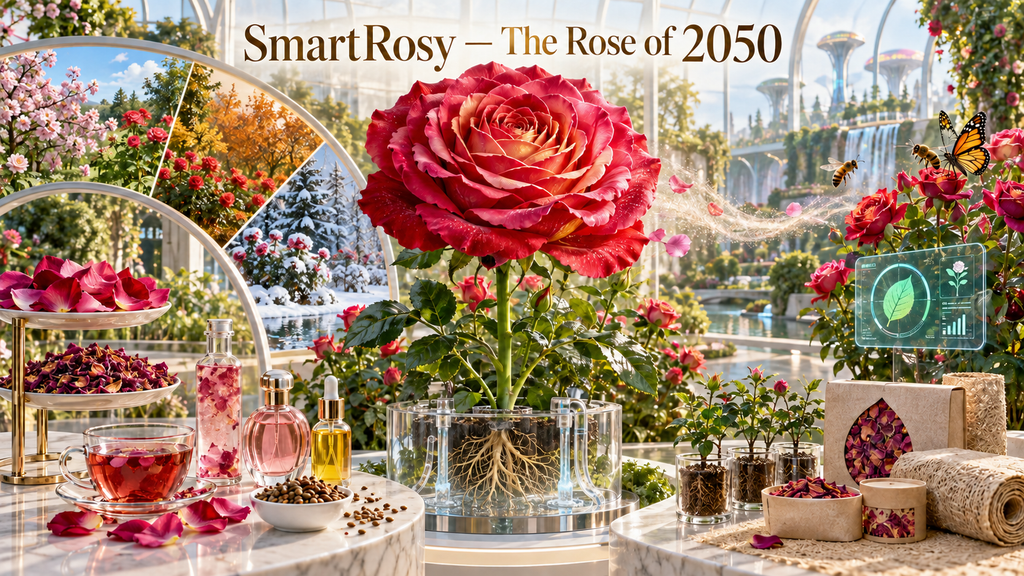
Roses already offer more than 100 features, benefits, uses, and sources of inspiration. SmartRosy is an imagined, genetically engineered rose of the future, created to bring many of these qualities together in one extraordinary plant—and expand them through advanced horticultural science and technology.
Each SmartRosy flower weighs more then 100 grams and unfolds into about one hundred edible petals. Its blossoms appear in an exceptional range of beautiful colors and release a sweet, gentle rose fragrance. Their beauty, texture, flavor, and scent create a rich sensory experience designed to bring nature more fully into everyday life.
Within this science-fiction story, SmartRosy is developed to support mental, emotional, physical, and spiritual well-being. Its beauty and fragrance encourage relaxation, calmness, affection, peace, laughter, happiness, and joy among individuals, couples, families, friends, and communities.
SmartRosy represents a hopeful way of living—a future in which people pursue a happy, healthy, prosperous, well-informed, and long life. It may support healthier habits and greater longevity, potentially helping people live actively and pleasantly for 100 plus years or longer.
These are imagined future possibilities, not established medical claims.
A Rose for Celebrations and Meaningful Moments
SmartRosy is an ideal symbolic gift for Mother’s Day, Father’s Day, Valentine’s Day, New Year celebrations, birthdays, anniversaries, weddings, graduations, full-moon gatherings, and other meaningful occasions.
It can express love, friendship, gratitude, admiration, appreciation, compassion, hope, renewal, remembrance, reconciliation, and good wishes for the future.
A single flower may communicate a quiet personal message, while a bouquet of one hundred SmartRosy blooms may celebrate a centennial birthday, a lifelong promise, or another remarkable achievement.
Four-Season Resilience and Abundance
Unlike conventional ornamental roses with limited blooming periods, SmartRosy is designed to flower throughout all four seasons. A single mature bush can produce hundreds—or potentially thousands—of blossoms during the year, indoors or outdoors.
Each thornless, soft-stemmed bush grows to more than one hundred centimeters in height. It can adapt to more than one hundred regions and diverse microclimates while requiring comparatively little water, artificial light, and external energy.
It is also designed to withstand varied environmental conditions and resist many common insects and plant diseases.
SmartRosy has no thorns, sharp prickles, or dangerously hard parts, making it more comfortable to grow, harvest, arrange, and enjoy.
Even after cutting, its flowers can remain fresh for approximately one to four weeks when placed in clean water with suitable plant nutrition.
SmartRosy can reproduce through several methods:
- Seeds produced through self-pollination
- Seeds produced through cross-pollination
- Stem cuttings
- Grafting
- Budding
Under carefully controlled conditions, one parent bush may provide enough seeds, stems, and other propagation material to produce more than one hundred new bushes in a year.
This abundance could help transform family yards, balconies, rooftops, community gardens, greenhouses, and urban spaces into flourishing micro-gardens and productive micro-farms.
Food, Fragrance, and Everyday Products
SmartRosy is a highly versatile, multipurpose plant. Its flowers can be used to create perfume, rose oil, rose water, scented products, decorations, keepsakes, and thoughtful gifts.
Its certified fresh and dried petals can be eaten, added to foods or drinking water, or prepared as soothing and uplifting teas. They may also be used in salads, desserts, preserves, syrups, and other carefully developed foods and beverages.
Each mature bush can produce more than one hundred—and potentially up to one thousand—viable, growable, and edible seeds.
In this imagined design, specially prepared leaves, stems, and roots may also be nutritious and edible. They could provide useful culinary ingredients while helping the plant approach a zero-waste production system.
SmartRosy researchers envision these edible components as sources of beneficial nutrients, antioxidants, and protective plant compounds. However, their nutritional value, safe preparation, appropriate quantities, possible allergies, and interactions would require rigorous scientific testing and regulatory approval before real-world use.
Unused petals, leaves, stems, roots, and other safe plant materials could be composted or transformed into natural dyes, fragrances, crafts, packaging materials, or soil-enriching products.
In this way, nearly every suitable part of SmartRosy could have a responsible purpose.
Sustainability and a Greener Future
SmartRosy represents adaptability, sustainability, and responsible innovation. Its ability to grow in diverse environments with minimal resources offers a hopeful vision of a greener future centered on useful, beautiful, multipurpose plants.
The bushes could support pollinators, beautify homes and neighborhoods, encourage urban greening, and help people develop a closer relationship with nature.
Indoors, SmartRosy could contribute to a fresh, pleasant, natural atmosphere, although it would not replace proper ventilation or air-filtration systems.
Responsible SmartRosy cultivation would use water-saving methods, renewable energy where practical, and recyclable, reusable, or biodegradable packaging.
Researchers would also need to prevent uncontrolled genetic spread, protect surrounding ecosystems, and ensure that the plant remains beneficial rather than invasive.
Mental Clarity, Learning, and Creativity
In this imagined future, approved SmartRosy foods, teas, and infusions may support a calm state of mind that is helpful for learning and concentration.
Researchers may study its nutrients and plant compounds for possible roles in healthy brain function, memory, and aging, without promising guaranteed results.
SmartRosy can also support learning through experience. Caring for the plant teaches patience, responsibility, biology, pollination, genetics, sustainability, nutrition, and environmental stewardship.
Its colors, fragrance, textures, and forms can create memorable sensory associations that enrich reading, writing, speaking, listening, studying, imagining, dreaming, and visualization.
The flower can inspire creative work in:
- Painting and fine art
- Photography
- Filmmaking and video production
- Fashion and textile design
- Interior and event decoration
- Creative writing and storytelling
- Poetry and spoken-word performances
- Music and songwriting
- Product and industrial design
- Perfumery
- Culinary arts
- Marketing and branding
- Crafts and handmade products
In homes, schools, libraries, studios, gardens, and exhibition spaces, SmartRosy can become both a living subject and a creative companion.
Emotional Well-Being and Human Connection
SmartRosy nurtures emotional well-being by inspiring affection, compassion, gratitude, friendship, love, and personal satisfaction.
Its fragrance, appearance, flavor, and connection with meaningful occasions can help create peaceful moments that people share with one another.
Giving, receiving, growing, or simply observing SmartRosy may offer comfort during stress, loneliness, sadness, grief, or recovery.
It may help people communicate feelings that are difficult to express in words and encourage appreciation, forgiveness, reconciliation, and renewed trust.
These benefits come not only from the plant itself but also from the caring actions surrounding it: gardening, giving, sharing, remembering, celebrating, creating, and spending meaningful time with others.
Mindfulness and Spiritual Enrichment
SmartRosy offers opportunities for emotional, physical, and spiritual enrichment through prayer, meditation, reflection, mindful breathing, journaling, focused work, and quiet concentration.
Its gentle fragrance and natural beauty can help people direct their attention toward the present moment.
It may inspire them to clarify their goals, appreciate life, recognize the needs of others, and approach daily activities with patience, purpose, gratitude, compassion, and hope.
For some people, these quiet moments may deepen their awareness of divine blessing, personal responsibility, the wonder of life, and humanity’s connection with the natural world.
SmartRosy respects different spiritual, religious, and cultural interpretations rather than requiring one universal meaning.
SmartRosy and the Five Senses
SmartRosy offers a joyful experience through all five senses:
- See: Appreciate its radiant colors, elegant forms, and approximately one hundred beautiful petals.
- Smell: Enjoy its sweet, gentle, and uplifting rose fragrance.
- Touch: Experience the soft, velvety texture of its thornless petals and stems.
- Taste: Enjoy its certified edible petals, seeds, teas, rose water, and carefully prepared foods.
- Listen: Combine SmartRosy experiences with birdsong, peaceful nature sounds, poetry, spoken words, or joyful music.
Together, these experiences can create cherished memories and make ordinary moments feel more meaningful.
See SmartRosy. Smell SmartRosy. Touch SmartRosy. Taste SmartRosy. Listen to music and nature—and enjoy all things rosy.
Comfortable Screen Breaks and the 20–20–20 Practice
SmartRosy can serve as a beautiful reminder to rest the eyes during reading or screen use.
Following the familiar 20–20–20 practice, a person can pause every twenty minutes and look at something approximately twenty feet—or six meters—away for at least twenty seconds.
A SmartRosy bush, flower garden, tree, window view, or another distant object can provide a pleasant focal point.
The benefit comes from looking away from the nearby screen, changing focus, blinking, moving, and resting—not from SmartRosy curing vision problems.
SmartRosy may therefore encourage healthier screen habits while helping people remember a simple principle:
Have a good mood, enjoy nourishing food, read a good book, appreciate good company, and take time to notice the beautiful things in life.
Economic Opportunity and Responsible Progress
SmartRosy could support gardening, agriculture, food production, perfumery, cosmetics, floristry, tourism, scientific research, education, environmental projects, celebrations, art, and many related products and services.
On a global scale, the future SmartRosy industry might create millions of jobs and potentially contribute trillions of dollars to the world economy.
Growers, researchers, food specialists, horticultural experts, artists, educators, designers, manufacturers, retailers, and community organizations could all participate in its development.
These figures are imaginative possibilities within the story rather than established economic forecasts.
SmartRosy’s success would need to be measured not only by growth and profit but also by accessibility, safety, environmental responsibility, public benefit, and respect for different communities.
A Flourishing Way of Life
SmartRosy is imagined as more than a flower. It is a symbol of a pleasant, purposeful, creative, informed, and sustainable way of living.
Growing, eating, studying, sharing, and responsibly using SmartRosy may help people improve their lives while caring for their families, communities, and environment.
It represents a future in which progress and prosperity grow together with persistent inspiration, responsible innovation, and an abundance of love, beauty, joy, happiness, pleasure, and satisfaction.
SmartRosy stands at the meeting point of horticulture and technology—a hopeful vision of nature and human innovation working in a balanced, beneficial, and symbiotic relationship for a better world.
SmartRosy is a fictional rose of the future. Its proposed medical, nutritional, longevity, environmental, technological, and economic benefits are imaginative possibilities, not established scientific facts.
Coming soon, as you like it!
+++++
++++
+++++++++++++
SmartRosy Story: The Future of Roses
Roses already offer more than one hundred features, benefits, uses, and sources of inspiration. SmartRosy is an imagined, genetically engineered rose of the future, designed to bring many of these qualities together in one extraordinary plant—and expand them through advanced horticultural science and technology.
Each SmartRosy flower has approximately one hundred edible petals and weighs about one hundred grams. Its blossoms appear in beautiful colors and release a sweet, gentle rose fragrance. In the world of this science-fiction story, SmartRosy is designed to support mental, emotional, physical, and spiritual well-being.
SmartRosy provides a natural and comforting experience for people facing everyday stress. Its beauty, fragrance, flavor, and presence encourage relaxation, calmness, peace, affection, happiness, laughter, and joy among friends, families, couples, and communities.
fe.SmartRosy helps humans improve their lives and live personally pleasantly and pleased with pleasures. It produces a lifestyle where progress and profit go hand in hand with positive, persistent inspiration from an abundance of love, joy, ecstasy, happiness, and satisfaction.
Within this imagined future, SmartRosy may contribute to healthier lifestyles and greater longevity, potentially helping people pursue the goal of living actively and happily for one hundred years or longer. These benefits are fictional possibilities explored by the story, not established medical claims.
+, and longevity, potentially supporting a life span of over 100 years. Happy, healthy, prosperous, and informed long life. anniversaries
The SmartRosy Story
2. Four-Seasons Resilience, Abundance, and Zero-Waste Biomass
Unlike conventional ornamental varieties constrained by short blooming cycles, a single SmartRosy bush produces hundreds—even thousands—of continuous blossoms across all four seasons.
Engineered with exceptional ecological vigor:
- Each thornless, soft-stemmed bush stands over 100 centimeters tall, thriving across 100 diverse global microclimates with minimal inputs of water, artificial energy, or light.
- Every plant yields over 100 nutrient-dense, edible seeds alongside tender, culinary-grade leaves, stems, and roots packed with protective polyphenols.
- Cut stems retain their vibrant, dewy freshness in nutrient-water for 1 to 4 full weeks, purifying domestic air and ensuring an unbroken connection with living nature indoors.
- Annually, each parent bush can propagate more than 100 viable new plants, turning humble family yards and urban spaces into flourishing, zero-waste micro-farms.
Remarkable Growth in All Four Seasons
A single SmartRosy bush can produce hundreds—or potentially thousands—of roses, blossoms, and flowers throughout the year. It is designed to grow and bloom during all four seasons, both indoors and outdoors.
Each mature bush can grow to more than one hundred centimeters in height and may produce enough plant material to propagate more than one hundred new bushes every year. SmartRosy can reproduce through seeds, stem cuttings, grafting, budding, self-pollination, and cross-pollination.
The plant is envisioned as capable of growing in more than one hundred regions of the world. It requires minimal water, light, and energy and can adapt to a wide variety of climates and environmental conditions. It is highly resistant to insects and has no thorns, sharp prickles, or dangerously hard parts.
After being cut, a SmartRosy flower can remain fresh for approximately one to four weeks when placed in clean water with suitable plant nutrition.
Every plant yields over 100 nutrient-dense, edible seeds alongside tender, culinary-grade leaves, stems, and roots packed with protective polyphenols.
Food, Fragrance, and Everyday Uses
SmartRosy is a highly versatile, multipurpose plant. Its flowers can be used to produce perfume, rose oil, rose water, scented products, decorations, and thoughtful gifts.
Its fresh or dried petals can be eaten, added to foods and drinking water, or used to prepare soothing and uplifting teas. Each bush can also produce more than one hundred viable, growable, and edible seedsas well as edible leaves, roots, and stems that promise relaxation, pleasure, and satisfaction..
In the fictional SmartRosy design, carefully prepared leaves, stems, and roots may also be edible and useful. They are imagined as ingredients that can provide pleasure, relaxation, nourishment, and satisfaction. Their safety and nutritional value would need to be scientifically tested and approved before any real-world use. It ensures that your eyes remain rested and capable of appreciating the aesthetic pleasures of seeing the beauty of beautiful things in life.
It is also an ideal symbolic gift for Mother’s Day, Valentine’s Day, New Year celebrations, birthdays, anniversaries, weddings, full-moon gatherings, and many other meaningful occasions. SmartRosy represents love, friendship, gratitude, hope, renewal, and the wish for a happy, healthy, prosperous, well-informed, and satisfying li
Sustainability and Economic Possibilities
SmartRosy represents sustainability, adaptability, and responsible innovation. Because it can thrive in diverse environments while using minimal resources, it offers a vision of a greener future built around multipurpose plants.
Its many uses could support gardening, agriculture, food production, health and wellness products, perfumes, cosmetics, tourism, scientific research, education, celebrations, art, and environmental projects.
On a large scale, the SmartRosy industry could potentially create millions of jobs and contribute trillions of dollars to the global economy. It stands at the intersection of horticulture and technology, symbolizing a future in which nature and innovation work together in a beneficial, balanced, and symbiotic relationship.
Mental Clarity, Learning, and Emotional Well-Being
In this imagined future, eating and using approved SmartRosy products may support mental clarity, concentration, and focus. These qualities are valuable for learning, studying, memorizing, remembering, planning, setting goals, following schedules, and maintaining attention on important tasks.
SmartRosy also nurtures emotional well-being by inspiring affection, compassion, gratitude, friendship, love, and personal satisfaction. Its fragrance, appearance, taste, and association with meaningful experiences help create peaceful moments that people can share with others.
+++
4. Cognitive Sharpness, Deep Focus, and Spiritual Serenity
Consuming certified culinary SmartRosy infusions, teas, and fresh petals delivers gentle, sustained neuro-protective benefits:
- Natural antioxidants support neurotransmitter balance, sharpening daily working memory, creative problem-solving, and disciplined goal-setting.
- Incorporating the plant into daily mindfulness routines—such as quiet prayer, breath meditation, or reflective journaling—fosters deep present-moment awareness, mental serenity, and steady emotional stamina.
Mindfulness and Spiritual Enrichment
SmartRosy offers opportunities for physical, emotional, and spiritual enrichment through prayer, meditation, reflection, mindful breathing, and quiet concentration.
Its gentle fragrance and natural beauty can help people direct their attention toward the present moment. It may inspire them to focus on their goals, appreciate life, recognize the needs of others, and approach their daily activities with patience, purpose, gratitude, and hope.
For some people, these mindful moments may also create a deeper awareness of divine blessing, personal responsibility, and the wonder of life.
A Flourishing Way of Life
SmartRosy is imagined as more than a flower. It is a symbol of a pleasant, purposeful, creative, and sustainable way of living.
Growing, eating, sharing, studying, and using SmartRosy may help people improve their lives while caring for their families, communities, and environment. It represents a lifestyle in which personal progress and economic prosperity grow together with positive and persistent inspiration.
SmartRosy offers an abundance of beauty, usefulness, affection, joy, happiness, pleasure, and satisfaction—a hopeful vision of a future in which people and nature flourish together.
martRosy helps humans improve their lives and live personally pleasantly and pleased with pleasures. It produces a lifestyle where progress and profit go hand in hand with positive, persistent inspiration from an abundance of love, joy, ecstasy, happiness, and satisfaction.
SmartRosy is a fictional rose of the future. Its proposed medical, nutritional, longevity, environmental, and economic benefits are imaginative possibilities, not established scientific facts.SmartRosy helps humans improve their lives and live personally pleasantly and pleased with pleasures. It produces a lifestyle where progress and profit go hand in hand with positive, persistent inspiration from an abundance of love, joy, ecstasy, happiness, and satisfaction.E
ach rose bush can also produce over 100 new bushes per year, with a height of 100+ centimeters. It can grow in over 100 areas around the world, with minimal water, light, or energy requirements, both indoors and outdoors, in all four seasons. Even after cutting, this rose can remain fresh for 1-4 weeks when placed in water with some nutrition. It also survives in many conditions, resists insects, and has no thorns, sharp prickles, or hard parts.
Smart Rosie enhances our personal and emotional well-being and represents a significant economic opportunity. It creates millions of jobs and contributes trillions of dollars to the global GDP. Smart Rosie stands at the intersection of horticulture and technology, symbolizing a future where nature and innovation create a symbiotic relationship for a better world. Iand full moon gatherings. Smart Rosie is designed to enhance happiness, laughter, and longevity, potentially supporting a life span of over 100 years. Happy, healthy, prosperous, and informed long life. anniversaries
Coming soon, as you like it!
Master Category Alignment & Archive Index
This presentation synthesizes foundational principles curated at best100plus.com (Roses: Best 100 Plus Features and Benefits):
- Category 1: Symbol of Love, Friendship & Natural Beauty — Inspiring social connection, family unity, and intentional gifting across all milestones to sustain lifelong emotional health.
- Category 2: Health & Wellbeing (Vitamin C, Meditation, Healing) — Restorative neuro-visual eye breaks, anti-stress aromatherapy, cellular antioxidants, and sensory meditation for centenarian longevity.
- Category 3: Economy & Finance (Rose Oil Industry, Jobs, Tourism) — Year-round zero-waste cultivation, high-yield propagation, clean jobs, and sustainable agro-economic growth.
- Category 4: Art & Inspiration (Shakespeare, Poetry, Design) — Living aesthetics, harmonious geometry, and creative daily inspiration.
- Category 5: Learning & Smart Living (Focus, Memory, Education) — Cognitive retention, active focus, mindful garden journaling, and screen-fatigue mitigation via the 20-20-20 rule.
+++++++gmnin++++++++++++++
Rewritten Script: SmartRosy at Expo 2050
Scene 1: The Pavilion of Tomorrow
- John: Welcome to the SmartRosy Pavilion at Expo 2050. Today we explore nature’s greatest botanical wonder: how the timeless rose inspires human creativity, supports the global economy, and unlocks secrets for a healthy, happy, 100-year life. Guiding us are master horticultural specialists Emily and Mike, supported by ComCom, our AI research analyst, alongside Linda and our visitors.
- Emily: Remember, while we celebrate real botanical science today, our visions of SmartRosy belong to our creative imagination. We introduce these future breakthroughs with the timeless invitation: “Coming soon, as you like it!”
- Linda: Emily, what makes our concept of SmartRosy unique?
- Emily: SmartRosy reimagines the classic red rose as a partner for human longevity, pairing classical beauty and calming natural aromatics with sustainable future biotechnology.
- Sam: What would one of these exhibition blooms look like?
- Mike: In our concept design, each bloom produces more than 100 velvety, nutrient-dense petals weighing approximately 100 grams, releasing a pure natural scent that calms the nervous system within seconds.
Scene 2: The Muse of Art and Mind
- John: Emily, how have roses nurtured human imagination through the centuries?
- Emily: From William Shakespeare’s classic verses to architectural motifs and song, the rose teaches the mind to appreciate balance, symmetry, and rhythm—essential mental habits for lifelong cognitive health.
- Maya: When creating an original work inspired by a rose, where should an artist begin?
- John: Begin with focused observation. Notice how a tight bud unfolds into a glorious bloom. Let your memory and personal purpose guide your brush, pen, or camera.
Scene 3: The most versatile methods of Propagation
- Sam: Mike, how can a single rose bush transform into an entire landscape?
- Mike: Through traditional propagation methods: saving seeds, taking stem cuttings, root layering, suckering, and precision grafting.
- Sam: Can a single flower pollinate itself?
- Emily: Most roses carry both male and female floral organs, though successful self-fertilization depends on variety and pollinator health.
Scene 4: The Four Seasons of Vitality
- David: How could a rose bloom consistently across all four seasons?
- Emily: In our future regenerative cultivation model, indoor four-season biospheres balance LED spectrum lighting, pure rainwater collection, and organic mineral nutrients to support perpetual flowering.
- Sam: Could a rose bush truly live and flourish for 100s or 1000 years?
- Emily: That is our ultimate horticultural ambition. Caring for a garden across generations connects youth with centenarians, reminding us that purpose and nature keep the human spirit young.
Scene 5: Functional Botanicals and Nutrition
- Maya: What everyday products originate from the rose?
- Emily: Therapeutic essential oils, culinary rose waters, and vitamin C–rich rose hips that support cellular immunity and cardiovascular wellness.
- Maya: Can visitors harvest and eat any flower they see?
- Mike: Never eat garden flowers unless they are certified organic, culinary-grade varieties free from chemical sprays.
- Sam: And what about SmartRosy’s conceptual edible foliage?
- Emily: That remains our speculative future project—“Coming soon, as you like it!” Ordinary rose stems have sharp protective thorns, but our vision imagines completely safe, edible bio-leaves packed with antioxidants.
Scene 6: Sustainable Earth Stewardship
- Linda: How does mindful gardening help us live longer, healthier lives?
- Emily: Gardeners live longer because nurturing living plants lowers blood pressure, provides restorative physical movement, and instills daily mindfulness.
- David: What records should a gardener keep?
- Mike: Keep a seasonal journal. Record bloom dates, rainfall, soil vitality, and companion planting patterns. Observation sharpens the mind at any age.
Scene 7: The Global Rose Economy
- David: How do roses generate meaningful employment worldwide?
- Emily: Through sustainable agriculture, clean perfumery, eco-tourism, botanical design, and wellness products. Roses sustain millions of skilled farming families across the globe.
- Anna: What makes a rose-based venture sustainable?
- John: Solve a genuine human need—whether providing restorative beauty, pure aromatherapy, or agricultural training—and conduct your business with ecological respect.
- Linda: ComCom, what is the economic outlook for these future innovations?
- ComCom: Our bio-economic model projects expanded green employment and localized greenhouse farming. These projections reflect aspirational design goals: “Coming soon, as you like it!”
Scene 8: Daily Reflection and Inner Peace
- Anna: How do roses elevate our day-to-day emotional well-being?
- Mike: Inhaling natural rose aromas triggers the release of endorphins and dopamine, dispelling anxiety and restoring emotional composure.
- Sam: Can a garden alone guarantee a 100-year life?
- Emily: No flower can guarantee longevity, but cultivating a daily connection with living nature gives us calmness, clean air, and joyful purpose.
- Maya: Do roses carry a deeper spiritual presence?
- John: Throughout human history, the symmetry of the rose has served as an emblem of silent meditation, love, and serene reflection
Scene 10: Learning & Smart Living — Focus, Memory, and Longevity
- John: Emily, how does the rose support mental clarity and our journey toward a vibrant, 100-year life?
- Emily: True longevity demands cognitive vitality. Bringing roses into workspaces stimulates the senses, clears mental fatigue, and anchors memory.
- Linda: How does rose aroma enhance learning?
- Emily: Natural rose scent engages the olfactory and limbic systems, easing stress and fostering alpha brainwaves for calm, focused retention.
- David: Which gardening habits protect an aging mind?
- Mike: Mindful observation. Keeping a garden journal, tracking bloom cycles, and pruning combine gentle physical activity with problem-solving to sustain neural plasticity.
- Maya: Can roses counter digital overload?
- John: Yes. Five quiet minutes admiring petal symmetry or breathing its natural aroma resets attention and restores inner balance.
- Sam: ComCom, how will 2050 bio-spaces use this?
- ComCom: Our concepts integrate living rose biosensors to monitor air purity and diffuse calming micro-scents during study: “Coming soon, as you like it!”
Scene 9: Closing Discoveries and Gratitude
- John: What timeless lesson does a single rose leave with us today?
- Anna: It reminds us that patience, care, and daily nourishment yield incomparable beauty and resilience.
- Sam: Today I learned that starting with one small cutting can help build a lifetime of wellness.
- Linda: To our botanists, creators, and teachers, what do we say?
- All: Thank you for your knowledge, creativity, and care!
- John: What lies ahead for our community?
- All: More questions, greater discoveries, and vibrant health—coming soon, as you like it!
- John: Discover the Best. Create Your Best. Visit Best100Plus.com.
++++
+++++
+++++
John, Mike, and Emily will guide the presentation, while ComCom, the information robot, and AI can provide access to extensive knowledge as the larger story develops.
+++++++++++++++++++++++++++++
SmartRosy: Questions, Answers, and Discoveries
John — Exhibition Host:
“Welcome to the SmartRosy exhibition. At Expo 2050, we explore useful questions, learn from thoughtful answers, and put what we discover into practice—with thanks and appreciation for those who help us learn.
“Today, Mike and Emily, our gardening specialists, will guide us. ComCom, our information robot, will support the discussion with AI and research. Linda will help our visitors participate.
Emily: “Our future SmartRosy ideas belong to this science-fiction story. We introduce them with the invitation, ‘Coming soon, as you like it!’ This expresses our imagination, not a confirmed release or scientific promise.”
1. Meet SmartRosy — Coming soon, as you like it!
Question — Linda: What makes SmartRosy special?
Answer — Emily: SmartRosy is our imagined, genetically engineered rose of 2050, combining beauty, fragrance, specialized uses, and extraordinary growing possibilities.
Question — Sam, a young visitor: What features would those flowers have?
Answer — Mike: Our exhibition variety is imagined with about 100 edible petals, weighing about 100 grams per bloom, a rich red color, and a sweet rose fragrance.
2. Roses and Creativity
Question — John: What can roses inspire us to create?
Answer — Emily: Poems, stories, photographs, paintings, songs, videos, clothing designs, decorations, and useful products.
Question — Maya, a creative visitor: How can I make something original?
Answer — John: Begin with your own observation, memory, or purpose. Ask who your creation is for and what you want it to express.
Question — Anna: How do we appreciate other creators?
Answer — John: Acknowledge their contributions, give proper credit, and respect the conditions for using their work.
Question — John: For whom do roses inspire us to create? Answer — Emily: Something personal and meaningful that others can enjoy, learn from, or use.
3. How Roses Reproduce and Multiply
Question — Sam: How can one rose plant become many?
Answer — Mike: Through seeds, stem cuttings, layering, root suckers, and budding or grafting.
Question — Sam: Can a rose produce seeds using its own pollen?
Answer — Emily: Some can. Rose flowers generally contain male and female reproductive structures, but successful self-fertilization depends on the variety.
Question — Anna: What is cross-pollination?
Answer — Mike: It is the transfer of pollen from another plant. When compatible roses successfully reproduce this way, their seedlings can inherit new combinations of characteristics.
Question — David, a home gardener: How do stem cuttings work?
Answer — Emily: A cut section of stem develops roots and grows into a new plant under suitable conditions.
Question — David: What is layering?
Answer — Mike: A stem develops roots while attached to the parent plant, then is separated to grow independently.
Question — Sam: What are root suckers?
Answer — Emily: They are shoots arising from roots. Some can be separated with roots of their own; on grafted roses, they may belong to the rootstock.
Question — Anna: What are budding and grafting?
Answer — Mike: They join a bud or stem from a chosen rose to a compatible rootstock.
Question — Sam: How can one rose plant produce so many roses? Answer — Emily: Through successful reproduction and propagation, supported by suitable conditions, knowledge, patience, and care.
4. Four-Season Growing — Coming soon, as you like it!
Question — David: How could SmartRosy flower throughout all four seasons?
Answer — Emily: In our imagined growing system, suitable varieties receive carefully managed light, water, nutrients, and temperatures.
Question — Sam: Could a bush live for 100 to 1,000 years?
Answer — Emily: That is an imagined design goal for our most advanced varieties—a way to explore gardens cared for across many generations.
5. Rose Products and Culinary Uses
Question — Maya: What useful products can come from roses?
Answer — Emily: Flowers for arrangements, fragrance ingredients, rose water, and suitable food-grown petals and hips for culinary uses.
Question — Maya: Can I eat any rose I receive?
Answer — Mike: No. Confirm that the particular plant part is suitable for eating, grown for food, and prepared appropriately.
Question — Sam: What about SmartRosy’s edible leaves, roots, and stems?
Answer — Emily: Those belong to specialized varieties in our story: “Coming soon, as you like it!” They are not instructions for eating ordinary rose plants.
Most parts of Smartrosy are edible, while typical rose bushes have thorns that protect them from animals and prevent them from being eaten.
6. Caring for Gardens and Resources
Question — Linda: How can we grow roses responsibly?
Answer — Emily: Choose suitable plants, meet their needs, monitor their health, and use water and other resources thoughtfully. Observe carefully, learn from results, and improve our choices over time.
Question — David: What should I record?
Answer — Mike: Growth, flowering, watering, growing conditions, and any problems or changes in care.
7. Work and Opportunity
Question — David: How can roses create useful work?
Answer — Emily: Through gardening, floristry, perfumery, food production, design, education, tourism, and related services. By connecting people’s skills with products, services, and experiences that meet real needs.
Question — Anna: How should someone choose a business idea?
Answer — John: Ask who needs it, what benefit it offers, what it requires, and whether you can provide it responsibly.
Question — Linda: What about SmartRosy’s future global economy?
Answer — ComCom: “Coming soon, as you like it!” introduces that fictional ambition. Its proposed scale is a possibility within the story, not an achieved result or guaranteed forecast.
8. Enjoyment, Reflection, and Well-Being
Question — Anna: How can roses become part of an enjoyable life?
Answer — Mike: Through growing, observing, creating, giving, and sharing experiences with others. By giving us occasions to notice beauty, practice care, and make time for meaningful experiences.
Question — Sam: Can a rose guarantee happiness or a longer life?
Answer — Emily: No. SmartRosy’s proposed health and longevity benefits are fictional research goals, introduced as “Coming soon, as you like it!”
Question — Maya: Can roses have spiritual meaning?
Answer — John: Yes. People may include them in prayer, meditation, remembrance, or quiet reflection according to their own beliefs.
9. Appreciation and Our Own Best100Plus
Question — John: How do we choose our own best rose-related ideas?
Answer — Anna: Compare them with our interests, needs, abilities, and resources, and explain why each choice matters. Keep asking, learning, comparing, and refining our choices with experience.
Question — Linda: What should we do with a useful answer?
Answer — David: Put it into practice, observe the result, and improve our understanding.
Question — Sam: How can we show thanks?
Answer — Maya: Acknowledge those who help us, care for what we receive, and share useful knowledge generously.
Closing Questions and Answers
Question — John: What makes SmartRosy special?
Answer — Emily: It connects the beauty of a living rose with an imaginative exploration of the future.
Question — John: What can one rose help us learn?
Answer — Anna: Language, gardening, creativity, responsible choices, and appreciation for other people’s knowledge.
Question — John: How can one plant become many?
Answer — Mike: Through appropriate reproduction and propagation methods, supported by care.
Question — John: What will you do with today’s discoveries?
Answer — Sam: Choose one useful question, understand its answer, and try something meaningful.
Question — Linda: What would we like to say to everyone who helped us learn?
Answer — Everyone: Thank you for your knowledge, creativity, patience, and care.
Question — John: What comes next?
Answer — Everyone: More questions, more discoveries, and more possibilities—coming soon, as you like it!
John: “Discover the Best. Create Your Best. Best100Plus.com.”
++++++++++++++++++++++++++++++++++++++++gpt++++
SmartRosy: Questions, Answers, and Discoveries
Scene 1 — One Rose, One Question
John — Exhibition Host:
“If you could grow one rose for someone you love, what would you want it to offer?”
Sam — A Young Visitor:
“Something beautiful that we could enjoy together. And perhaps another plant, so we could each have one.”
John:
“Then you have brought us a wonderful first question: how can something we enjoy become something we share?
“Welcome to the SmartRosy exhibition at Expo 2050.
“At Best100Plus tour, we explore useful questions, learn from thoughtful answers, and put our discoveries into practice—with thanks and appreciation for those who help us learn.
“Mike and Emily are our gardening specialists. ComCom, our information robot, will help us examine ideas and evidence. Linda will help everyone take part.”
Linda:
“Emily, is SmartRosy a rose we can buy today?”
Emily:
“No. SmartRosy belongs to our science-fiction story. We imagine its future with the invitation, ‘Coming soon, as you like it!’ That is an invitation to wonder, not a release date or a scientific promise.”
Scene 2 — Meet SmartRosy
Linda:
“What makes SmartRosy special?”
Emily:
“We imagine a genetically engineered rose that brings together beauty, fragrance, useful qualities, and new growing possibilities.
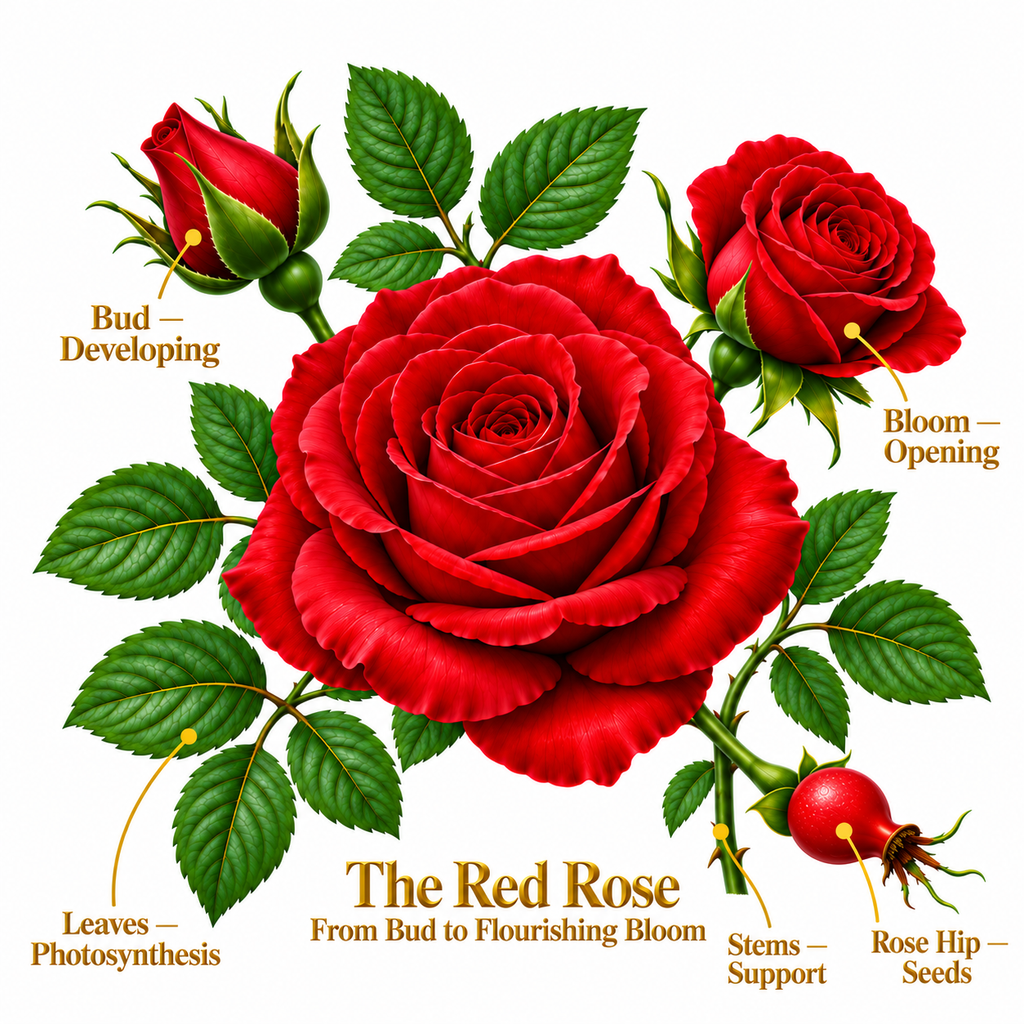
“Look closely. Its rich red petals curve around the center, opening outward in soft layers. Fresh green leaves surround the bloom. Even before we ask what it can do, there is something worth noticing.”
Sam:
“How many petals would it have?”
Mike:
“Our exhibition variety has more than one hundred edible petals, with each bloom weighing about one hundred grams. Those are imagined specifications for SmartRosy.
“We also imagine stems without sharp prickles, making this variety easier to handle.”
Maya — A Creative Visitor:
“Would every SmartRosy be the same?”
Emily:
“No. Our fictional collection includes compact plants for small spaces, varieties developed for fragrance, and others intended for food production. Different purposes call for different qualities.”
Sam:
“So which one would be best?”
Mike:
“The one that suits your purpose and growing conditions. A beautiful choice becomes a better choice when you understand what it needs.”
Scene 3 — A Rose Becomes an Idea
John:
“What could you create from the rose in front of you?”
Maya:
“A photograph of the light on its petals. Or a story about the person receiving it.”
Emily:
“A rose can also inspire painting, music, clothing, decoration, a new product, or a few carefully chosen words.”
John:
“Begin with something you notice. A folded petal. A color that reminds you of home. A flower someone once gave you.
“Then ask what you want another person to see or feel.”
Anna — A Visitor:
“What if another artist’s work gives me the idea?”
John:
“Learn from it, acknowledge the contribution, and respect the conditions for using that work. Give your own observations room to shape what you make.”
Maya:
“How will I know whether my creation is meaningful?”
Emily:
“Ask whom it is for and what it offers them. It might bring delight, explain an idea, preserve a memory, or help someone feel remembered.”
Scene 4 — From One Plant to Many
Sam:
“How could I grow another plant to share?”
Mike:
“One method is a stem cutting. Under suitable conditions, a section of stem develops roots and becomes a new plant.”
David — A Home Gardener:
“Could I use seeds instead?”
Emily:
“Yes, although growing roses from seed takes patience. Seedlings can differ from their parents. Cuttings generally preserve the characteristics of the plant they came from.”
Anna:
“What is cross-pollination?”
Mike:
“It is pollen moving between flowers on different plants. When compatible roses produce seeds this way, the seedlings can have new combinations of traits.”
Sam:
“What are the other methods?”
Emily:
“With layering, a stem forms roots while still attached to its parent.
“Some roses also produce shoots from their roots, called suckers. A suitably rooted shoot may become a separate plant. On a grafted rose, however, it may come from the rootstock rather than the rose growing above it.”
David:
“And what does grafting mean?”
Mike:
“Joining a chosen stem to a compatible rootstock. Budding uses a bud for the same purpose.”
Sam:
“Does making more plants also mean making more flowers?”
Emily:
“They are different goals. One established bush can produce many flowers. Propagation gives you additional plants. Both depend on suitable conditions and care.”
Scene 5 — A Garden Across the Seasons
David:
“How could SmartRosy flower in all four seasons?”
Emily:
“In our imagined growing system, we match each variety with suitable light, temperature, water, and nutrients. Protected growing spaces help us manage changing conditions.”
Mike:
“Ordinary roses have their own flowering seasons. Some repeat their bloom, but that does not mean every rose flowers all year.”
Sam:
“Could one SmartRosy bush live for one hundred—or even one thousand—years?”
Emily:
“That is one of our most ambitious fictional research goals. Imagine a garden cared for by children, then their children, and generations after them.
“We have not established that SmartRosy could live that long. But the idea asks us to think beyond our own lifetime.”
Anna:
“What could we pass on, even if one plant did not survive?”
John:
“Our knowledge, garden records, new plants, and the habit of caring for something another person will enjoy.”
Scene 6 — Fragrance, Flavor, and Useful Products
Maya:
“What could roses offer beyond a beautiful display?”
Emily:
“Flowers for arrangements, fragrance ingredients, and food-grade rose water. Suitable food-grown petals can also bring color and flavor to dishes.”
Maya:
“Could I taste a petal from a gift bouquet?”
Mike:
“Do not assume it is food. Confirm the plant’s identity, the edible part, and how it was grown. Flowers sold for decoration may have treatments unsuitable for eating. Washing does not make an unsuitable flower safe.”
Sam:
“What about SmartRosy’s leaves, roots, and stems?”
Emily:
“In our story, specialized food varieties are imagined with additional edible parts. That does not make ordinary rose leaves, roots, or stems food.
“Even in our imagined research program, each part would need its own safety assessment.”
Linda:
“Could SmartRosy also make a longer-lasting gift?”
Emily:
“We imagine an experimental cut-flower variety that keeps its beauty and fragrance longer in suitable conditions. Its performance would need testing.”
Maya:
“What should I ask before choosing a rose product?”
Mike:
“Ask what it is intended for. A fragrance product, a decorative flower, and a food ingredient are different things.”
Scene 7 — Caring for the Garden
Linda:
“How do we care for roses and use resources thoughtfully?”
Emily:
“Start by choosing plants suited to the place. Observe their growth, meet their needs, and adjust care when conditions change.”
David:
“What should I record?”
Mike:
“Watering, weather, flowering, and signs of problems. A photograph taken from the same position can help you notice changes.”
ComCom — Information Robot:
“In this exhibition, I organize those observations into an illustrated garden diary. I can help you compare records and prepare questions. My suggestions still need checking.”
David:
“How would we know whether a new SmartRosy system really saves resources?”
ComCom:
“Measure them. Compare water, energy, materials, and plant health under similar conditions. A promising idea becomes more useful when we test it fairly.”
Scene 8 — Useful Work, Real Needs
David:
“Could a love of roses become useful work?”
Emily:
“Yes. Think of gardeners, florists, fragrance makers, designers, educators, and people who welcome visitors into gardens.”
Maya:
“I could teach a workshop where people photograph roses and write a short story.”
John:
“And your first question could be: who would enjoy that experience, and what would they learn?”
Anna:
“How should someone choose a business idea?”
John:
“Understand the people you want to serve. Consider the value, costs, skills, and responsibilities involved. Begin with something you can provide well.”
Linda:
“What about SmartRosy’s imagined worldwide economy?”
ComCom:
“It is a possibility within the story, not a guaranteed forecast. We can imagine new opportunities without inventing future results.”
David:
“What would make an opportunity worth pursuing?”
Emily:
“Meeting a real need while treating people and resources with care.”
Scene 9 — Beauty, Memory, and Well-Being
Anna:
“Why can a simple rose feel so meaningful?”
John:
“Sometimes because of the person who gave it to us. Sometimes because we grew it ourselves. Beauty can become part of a memory.”
Sam:
“I would like to give one to someone who feels lonely. Would it make them happy?”
Emily:
“It might be a welcome gesture, especially with your company and attention. But no flower can guarantee happiness or a longer life.”
Mike:
“Growing, observing, creating, and sharing can give us enjoyable things to do. We should not turn those experiences into promises of medical treatment.”
Anna:
“Can roses belong in prayer or quiet reflection?”
John:
“Yes, according to each person’s beliefs and preferences. Someone might place a rose beside a photograph, sit quietly in a garden, or remember a person they miss.”
Sam:
“Then what would be the most important part of my gift?”
Emily:
“Showing that you have thought about the person receiving it—and taking time to be with them.”
Scene 10 — Your Own Best100Plus
John:
“How do we choose our own best rose-related ideas?”
Anna:
“By comparing them with our interests, needs, abilities, and resources—and explaining why each choice matters.”
Linda:
“You can begin with one useful choice. Your list can grow as you learn.”
Maya:
“I will create a rose photograph and a short message for someone I appreciate.”
David:
“I will start a garden diary before changing how I care for my plants.”
Sam:
“I will learn which rose suits our garden. Then I will ask for help growing another plant to share.”
Linda:
“What should we do when an idea does not work as expected?”
ComCom:
“Record what happened, check our assumptions, and revise the plan. An unexpected result can give us a better question.”
Scene 11 — What Will You Grow?
John:
“We began with one rose for someone you love. What will you take home from this exhibition?”
Sam:
“A question I can investigate, an idea I can try, and someone I want to share it with.”
Anna:
“And a reminder to thank the people who help us learn.”
Linda:
“What would we like to say to them?”
Everyone:
“Thank you for your knowledge, creativity, patience, and care.”
John:
“What comes next?”
Emily:
“More questions, more discoveries, and more possibilities—coming soon, as you like it!”
John:
“Imagine what a future rose might become. Notice what a living rose offers today. Then choose one meaningful thing to grow, create, or share.
“Discover the Best. Create Your Best. Best100Plus.com.”
++++gmni++++
Rewritten Script: SmartRosy at Expo 2050
Scene 1: The Pavilion of Tomorrow
- John: Welcome to the SmartRosy Pavilion at Expo 2050. Today we explore nature’s greatest botanical wonder: how the timeless rose inspires human creativity, supports the global economy, and unlocks secrets for a healthy, happy, 100-year life. Guiding us are master horticultural specialists Emily and Mike, supported by ComCom, our AI research analyst, alongside Linda and our visitors.
- Emily: Remember, while we celebrate real botanical science today, our visions of SmartRosy belong to our creative imagination. We introduce these future breakthroughs with the timeless invitation: “Coming soon, as you like it!”
- Linda: Emily, what makes our concept of SmartRosy unique?
- Emily: SmartRosy reimagines the classic red rose as a partner for human longevity, pairing classical beauty and calming natural aromatics with sustainable future biotechnology.
- Sam: What would one of these exhibition blooms look like?
- Mike: In our concept design, each bloom produces more than 100 velvety, nutrient-dense petals weighing approximately 100 grams, releasing a pure natural scent that calms the nervous system within seconds.
Scene 2: The Muse of Art and Mind
- John: Emily, how have roses nurtured human imagination through the centuries?
- Emily: From William Shakespeare’s classic verses to architectural motifs and song, the rose teaches the mind to appreciate balance, symmetry, and rhythm—essential mental habits for lifelong cognitive health.
- Maya: When creating an original work inspired by a rose, where should an artist begin?
- John: Begin with focused observation. Notice how a tight bud unfolds into a glorious bloom. Let your memory and personal purpose guide your brush, pen, or camera.
- Anna: And how do we properly honor those who inspired us?
- John: Acknowledge your teachers, give credit generously, and build upon their wisdom with integrity.
Scene 3: The most versatile methods of Propagation
- Sam: Mike, how can a single rose bush transform into an entire landscape?
- Mike: Through traditional propagation methods: saving seeds, taking stem cuttings, root layering, suckering, and precision grafting.
- Sam: Can a single flower pollinate itself?
- Emily: Most roses carry both male and female floral organs, though successful self-fertilization depends on variety and pollinator health.
Scene 4: The Four Seasons of Vitality
- David: How could a rose bloom consistently across all four seasons?
- Emily: In our future regenerative cultivation model, indoor four-season biospheres balance LED spectrum lighting, pure rainwater collection, and organic mineral nutrients to support perpetual flowering.
- Sam: Could a rose bush truly live and flourish for 100s or 1000 years?
- Emily: That is our ultimate horticultural ambition. Caring for a garden across generations connects youth with centenarians, reminding us that purpose and nature keep the human spirit young.
Scene 5: Functional Botanicals and Nutrition
- Maya: What everyday products originate from the rose?
- Emily: Therapeutic essential oils, culinary rose waters, and vitamin C–rich rose hips that support cellular immunity and cardiovascular wellness.
- Maya: Can visitors harvest and eat any flower they see?
- Mike: Never eat garden flowers unless they are certified organic, culinary-grade varieties free from chemical sprays.
- Sam: And what about SmartRosy’s conceptual edible foliage?
- Emily: That remains our speculative future project—“Coming soon, as you like it!” Ordinary rose stems have sharp protective thorns, but our vision imagines completely safe, edible bio-leaves packed with antioxidants.
Scene 6: Sustainable Earth Stewardship
- Linda: How does mindful gardening help us live longer, healthier lives?
- Emily: Gardeners live longer because nurturing living plants lowers blood pressure, provides restorative physical movement, and instills daily mindfulness.
- David: What records should a gardener keep?
- Mike: Keep a seasonal journal. Record bloom dates, rainfall, soil vitality, and companion planting patterns. Observation sharpens the mind at any age.
Scene 7: The Global Rose Economy
- David: How do roses generate meaningful employment worldwide?
- Emily: Through sustainable agriculture, clean perfumery, eco-tourism, botanical design, and wellness products. Roses sustain millions of skilled farming families across the globe.
- Anna: What makes a rose-based venture sustainable?
- John: Solve a genuine human need—whether providing restorative beauty, pure aromatherapy, or agricultural training—and conduct your business with ecological respect.
- Linda: ComCom, what is the economic outlook for these future innovations?
- ComCom: Our bio-economic model projects expanded green employment and localized greenhouse farming. These projections reflect aspirational design goals: “Coming soon, as you like it!”
Scene 8: Daily Reflection and Inner Peace
- Anna: How do roses elevate our day-to-day emotional well-being?
- Mike: Inhaling natural rose aromas triggers the release of endorphins and dopamine, dispelling anxiety and restoring emotional composure.
- Sam: Can a garden alone guarantee a 100-year life?
- Emily: No flower can guarantee longevity, but cultivating a daily connection with living nature gives us calmness, clean air, and joyful purpose.
- Maya: Do roses carry a deeper spiritual presence?
- John: Throughout human history, the symmetry of the rose has served as an emblem of silent meditation, love, and serene reflection
Scene 10: Learning & Smart Living — Focus, Memory, and Longevity
- John: Emily, how does the rose support mental clarity and our journey toward a vibrant, 100-year life?
- Emily: True longevity demands cognitive vitality. Bringing roses into workspaces stimulates the senses, clears mental fatigue, and anchors memory.
- Linda: How does rose aroma enhance learning?
- Emily: Natural rose scent engages the olfactory and limbic systems, easing stress and fostering alpha brainwaves for calm, focused retention.
- David: Which gardening habits protect an aging mind?
- Mike: Mindful observation. Keeping a garden journal, tracking bloom cycles, and pruning combine gentle physical activity with problem-solving to sustain neural plasticity.
- Maya: Can roses counter digital overload?
- John: Yes. Five quiet minutes admiring petal symmetry or breathing its natural aroma resets attention and restores inner balance.
- Sam: ComCom, how will 2050 bio-spaces use this?
- ComCom: Our concepts integrate living rose biosensors to monitor air purity and diffuse calming micro-scents during study: “Coming soon, as you like it!”
Scene 9: Closing Discoveries and Gratitude
- John: What timeless lesson does a single rose leave with us today?
- Anna: It reminds us that patience, care, and daily nourishment yield incomparable beauty and resilience.
- Sam: Today I learned that starting with one small cutting can help build a lifetime of wellness.
- Linda: To our botanists, creators, and teachers, what do we say?
- All: Thank you for your knowledge, creativity, and care!
- John: What lies ahead for our community?
- All: More questions, greater discoveries, and vibrant health—coming soon, as you like it!
- John: Discover the Best. Create Your Best. Visit Best100Plus.com.
+
++++++++++++++++++++++++++++++++
Scene 10: Learning and Smart Living — Focus, Memory, and the 100-Year Life
- John: Welcome back to our final discovery circle. Emily, looking across our journey at Expo 2050, how does the timeless rose fit into our daily focus, mental clarity, and the ambition of living a healthy, active 100-year life?
- Emily: John, true longevity depends not only on physical wellness, but on cognitive vitality and smart, lifelong learning. Welcoming the rose into study, workspace, and contemplative routines provides natural neuro-sensory stimulation that clears mental clutter, sharpens active focus, and anchors lasting memory.
- Linda: How does the simple aroma of a rose impact our brain’s ability to learn and retain information?
- Emily: Natural rose aromatics—especially real rose essential oil—interact directly with our olfactory system and limbic brain, soothing acute stress and promoting alpha brainwave activity. When the nervous system shifts from tension into calm alertness, our capacity to absorb, synthesize, and remember complex knowledge expands dramatically.
- David: For those of us tending gardens at home or learning new skills later in life, what habits keep our minds young?
- Mike: Mindful observation. Keeping a detailed seasonal garden journal, tracking bloom cycles, pruning carefully, and testing propagation methods provide a continuous stream of low-impact physical exercise and cognitive problem-solving. This active mental engagement protects neural plasticity well into one’s golden decades.
- Maya: Can a rose help us stay grounded in an era dominated by screens, data, and digital acceleration?
- John: Absolutely, Maya. Spending just five quiet minutes observing the geometry of rose petals or inhaling its natural fragrance resets sensory overload. It brings us into the present moment, teaching us that meaningful growth, just like the blooming of a premier rose, cannot be rushed.
- Sam: ComCom, how will smart bio-learning environments in 2050 use these botanical principles?
- ComCom: Our conceptual 2050 design models integrate natural living rose biosensors into smart workspaces to optimize ambient humidity, monitor indoor air purity, and release micro-calming scents during deep research cycles: “Coming soon, as you like it!”
Disclaimer of Liability: The botanical, historical, lifestyle, and wellness observations shared here are provided for general educational, cultural, and informational purposes only. They do not substitute for professional medical, clinical, financial, or horticulture advice. Readers should consult qualified specialists before adopting new therapeutic, agricultural, or nutritional regimens.
++++++++++++++++++++++++++++++++
5. SmartRosy Digital Passport
Each bush could have a small scannable identity tag recording:
- Variety and genetic history
- Birth or planting date
- Approved edible parts
- Care instructions
- Allergy warnings
- Water and energy use
- Flower and seed production
- Environmental impact
- Ownership and gift history
A centenarian’s SmartRosy could preserve one hundred years of family memories.
Modular growing forms
SmartRosy could grow in several controlled forms:
- A single stem
- A compact tabletop plant
- A potted bush
- A home-garden bush
- A climbing arch
- A community-garden hedge
- A greenhouse food crop
- A vertical garden wall
This connects naturally with your existing six rose forms.
12. Zero-waste production
After safety testing, every suitable part could serve a purpose:
| Plant part | Possible fictional use |
|---|---|
| Petals | Food, tea, perfume, decoration |
| Rose water | Drinks, cooking, fragrance |
| Oil | Perfume, cosmetics, candles |
| Seeds | Food, propagation, research |
| Leaves | Tea, food ingredients, compost |
| Stems | Fiber, crafts, propagation |
| Roots | Research or approved ingredients |
| Fallen material | Compost, dye, packaging |
Not every plant part must be edible in every variety.
My strongest recommendation
Do not add every feature directly to the main narrative. Use this structure:
- Main story: characters, questions, demonstrations, choices, and consequences
- Expo information displays: facts and short feature summaries
- Comycom2050: evidence, qualifications, and warnings
- SmartRosy 100+ Catalog: complete predictions and technical details
- Website and videos: separate episodes exploring each category
This approach will make SmartRosy easier to read, visualize, remember, and adapt into a continuing Best100Plus series.